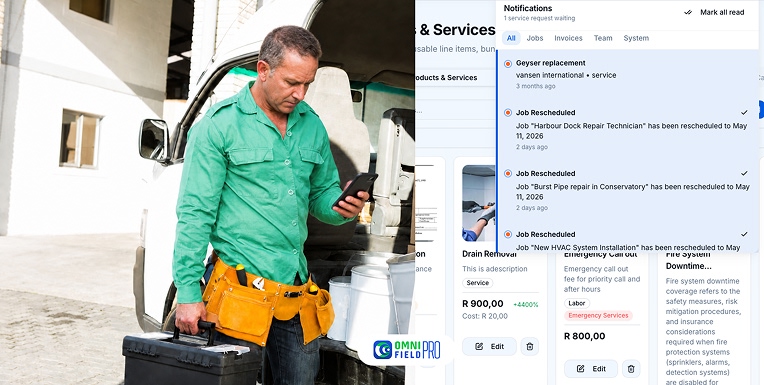
What Digital Transformation Means for Contractors
Digital transformation for service contractors isn't about bleeding-edge AI or enterprise software costing millions. It's about replacing the manual, error-prone processes that cost you money every day.
The Paper Problem
Most South African service contractors still rely on:
- Paper job cards filled out in illegible handwriting
- WhatsApp messages for job dispatch (with no tracking)
- Excel spreadsheets for scheduling (that break weekly)
- Handwritten invoices sent days or weeks after completion
- Filing cabinets full of compliance documents nobody can find
The Cost of Staying Analogue
| Paper Process | Hidden Cost |
|---|---|
| Manual job scheduling | 2-3 hours/day for admin staff |
| Paper invoicing | 30-60 day payment delays |
| No inventory tracking | 30-50% premium on emergency parts |
| Phone-based dispatch | Missed jobs, double-bookings |
| Paper compliance records | Audit failures, potential fines |
The 5-Step Digital Transformation Roadmap
Step 1: Digitise Job Management (Week 1)
Start with the core: replace paper job cards with digital work orders.
- Create jobs on a central platform
- Assign to technicians via mobile app
- Track job status in real-time
- Capture photos, notes, and signatures digitally
Impact: Immediate visibility into daily operations.
Step 2: Mobile-Enable Your Technicians (Week 2)
Your technicians already have smartphones. Give them a purpose-built app that:
- Shows their daily schedule
- Provides navigation to job sites
- Works offline in areas without connectivity
- Captures all job data digitally
Impact: Technicians spend less time on admin, more time on billable work.
Step 3: Automate Invoicing (Week 3)
Connect job completion to invoicing:
- Invoices generated automatically from completed job data
- Sent to customers via email immediately
- Payment tracking and automated reminders
- Integration with your accounting system
Impact: Cash flow improvement within the first month.
Step 4: Implement Customer Communication (Week 4)
Keep customers informed automatically:
- Job booking confirmations
- Technician ETA notifications
- Job completion summaries
- Follow-up satisfaction surveys
Impact: Customer satisfaction and repeat business increase.
Step 5: Analyse and Optimise (Ongoing)
Use your new digital data to:
- Identify your most and least profitable job types
- Track technician performance and utilisation
- Spot seasonal demand patterns
- Reduce response times and improve first-time fix rates
Why SA Contractors Choose Omni Field
- Up and running in hours, not months
- No IT department needed, intuitive mobile app
- Works offline, essential for South African conditions
- ZAR pricing, no USD exchange rate surprises
- Local support team, SAST business hours